
Cameron Otto · 10 October 2026
Community Interaction Dynamics Shaping Content Visibility in Specialized Online Curation Networks
Specialized online curation networks rely on layered community interactions that determine which items gain prominence and which fade from view, and these patterns have grown more intricate as platforms incorporate real-time feedback loops. Users engage through comments, shares, saves, and votes, each action feeding into ranking systems that adjust visibility scores continuously. Research indicates that clusters of active participants can accelerate or suppress content reach within hours, particularly in niche communities focused on topics like rare book collecting, experimental music, or urban planning archives.
Core Mechanisms of Interaction
Visibility in these networks stems from collective signals rather than isolated posts, where initial engagement from core members often triggers broader distribution. Data from platform analytics shows that content receiving rapid replies within the first thirty minutes tends to surface in recommendation feeds for extended periods, while slower uptake leads to quicker demotion. Observers note that threaded discussions amplify this effect because replies create additional nodes that algorithms interpret as sustained interest.
Take one case where experts tracked a specialized photography curation site in 2025, and they found that collaborative tagging sessions increased item impressions by factors of three to five compared with solo uploads. Those who've studied these systems know that cross-user mentions and quote chains function similarly, routing attention through established social pathways instead of random discovery. In October 2026, aggregated reports revealed that networks emphasizing reply quality over volume saw steadier visibility patterns across seasonal content cycles.
Feedback Loops and Algorithmic Response
Algorithms in curation platforms process interaction velocity and density to recalibrate rankings, creating self-reinforcing cycles where early momentum compounds. Evidence suggests that negative interactions, such as downvotes or reports, exert stronger downward pressure than positive ones push upward, which shapes cautious posting behaviors in many communities. Researchers discovered through longitudinal studies that users who participate in moderation tasks indirectly influence visibility thresholds by refining what counts as relevant engagement.
What's interesting is how geographic clusters affect outcomes, with concentrated user groups in specific time zones generating spikes that algorithms then normalize across global audiences. A study conducted at the University of Toronto documented these regional effects in detail, showing measurable differences in content half-life between North American and European subgroups. University of Toronto analysis highlights how localized reply chains sustain visibility longer than dispersed single votes.
Network Structures and Content Pathways
Specialized curation networks often feature dense subgraphs where repeated interactions among the same participants solidify content hierarchies. These structures reward consistent contributors whose histories of engagement lend credibility signals that algorithms prioritize. Figures reveal that items introduced by established members reach secondary recommendation layers faster, whereas newcomer submissions require higher interaction thresholds to achieve comparable exposure.
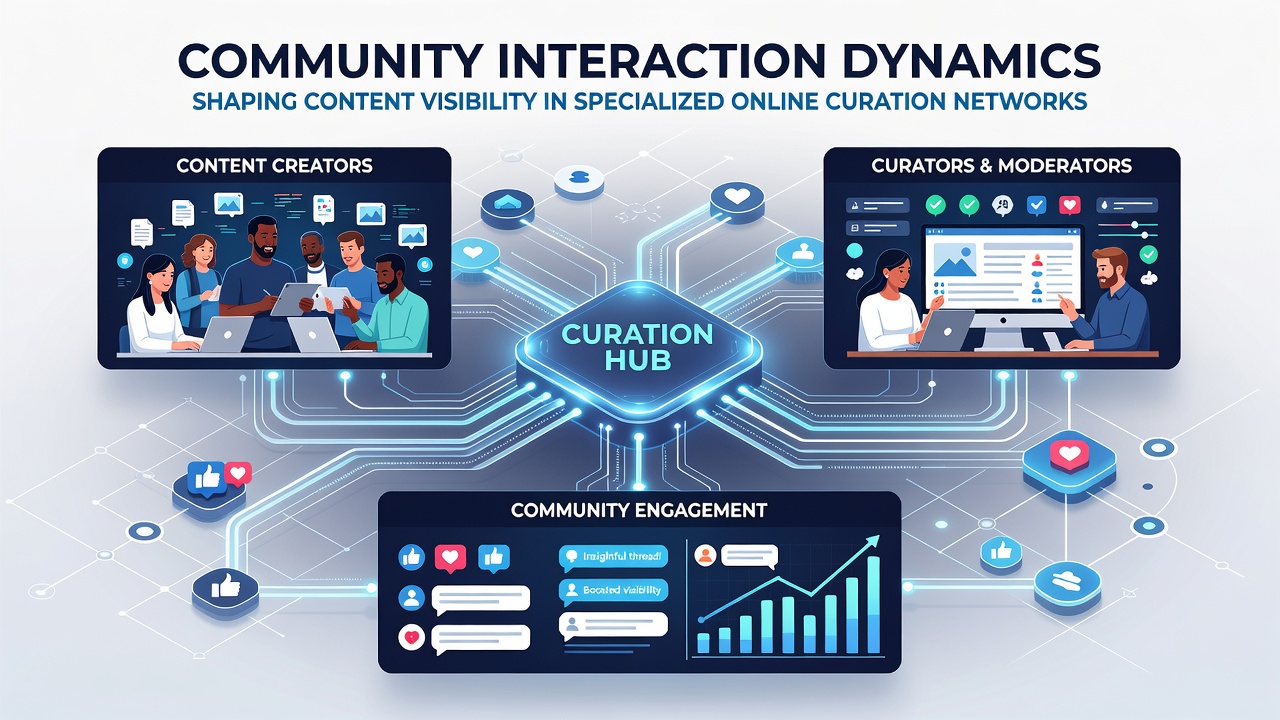
But here's the thing, external linking patterns add another dimension because curated items shared across affiliated communities inherit visibility boosts from the originating network's reputation metrics. European Commission digital platform reports from mid-2026 noted similar cross-network effects in creative industry archives, where shared collections maintained elevated positions due to sustained multi-community dialogue. European Commission platform studies track these transfers through anonymized traffic data.
Empirical Patterns Observed in 2026
October 2026 brought several platform updates that altered interaction weighting, with some networks reducing emphasis on raw vote counts in favor of conversation depth indicators. Those monitoring these shifts report that content accompanied by detailed annotations now competes more effectively against high-volume but shallow threads. Longitudinal data sets indicate that networks incorporating user-reported relevance scores experienced fewer visibility swings during peak activity periods.
People who've examined archive-style curation sites observe that seasonal themes, such as historical document roundups, generate interaction bursts that algorithms extend through related-item suggestions. This creates extended visibility windows measured in days rather than hours, provided the initial cluster maintains momentum through follow-up contributions.
Conclusion
Community interaction dynamics continue to define content visibility boundaries in specialized online curation networks through measurable pathways of engagement and algorithmic response. Ongoing data collection across multiple platforms shows that these processes remain sensitive to both volume and quality of user signals, producing predictable yet adaptable distribution outcomes. Future adjustments to weighting systems will likely build on these established patterns rather than replace them entirely.