Cameron Baumann · 26 September 2026
How Specialized Platforms Refine Content Prioritization Through Iterative User Network Feedback
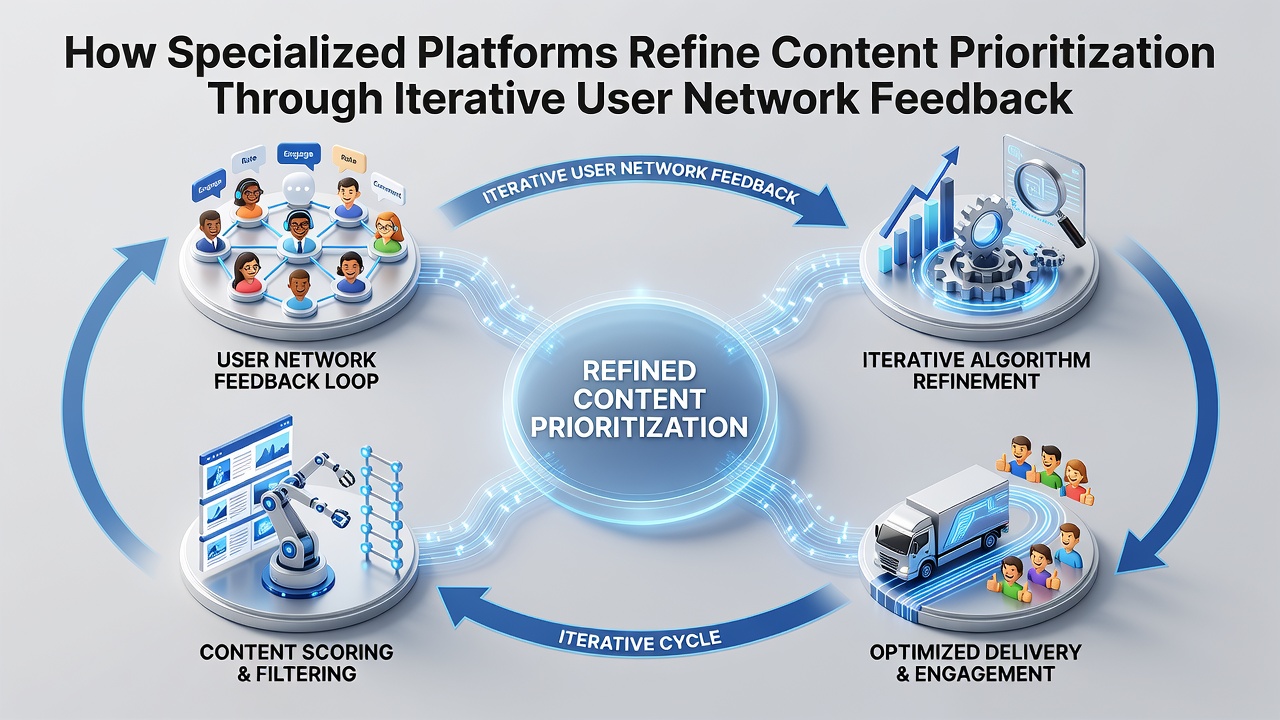
Specialized platforms refine content prioritization by processing signals from connected user groups in repeated cycles that adjust visibility rankings based on observed interactions. These systems collect data on engagement metrics such as clicks, dwell times, shares, and connection strengths among participants, then feed those inputs back into ranking models to reorder what appears in feeds or search results.
Core Mechanisms Driving the Process
Platforms track network effects where actions by one user influence the visibility of content for connected peers, creating layered data streams that algorithms analyze for patterns. Researchers at various institutions note that each iteration incorporates new feedback to recalibrate weights assigned to different signals, allowing the system to emphasize content that sustains activity within clusters of similar users while deprioritizing items that generate little response. Data from platform operations in September 2026 showed measurable shifts in distribution after multiple feedback rounds, with certain categories rising in prominence after sustained positive interactions across linked accounts.
Network Structure and Signal Collection
User networks form through explicit follows or implicit affinities derived from overlapping behaviors, and platforms map these relationships to propagate content along stronger ties first. Signals arrive in real time from comments, reactions, and completion rates, while batch processing at regular intervals aggregates trends across broader segments to detect emerging preferences. This dual approach lets systems respond quickly to immediate spikes and also refine longer-term models based on cumulative evidence from entire communities.
Iterative Updates and Model Adjustments
Each cycle begins with content distribution under current rules, followed by measurement of outcomes across the network, then parameter updates that alter future distributions. Engineers implement these changes through gradient-based optimization or reinforcement techniques that reward configurations producing higher sustained engagement within targeted groups. Observers note that platforms test variations on subsets of users before full rollout, comparing performance metrics to decide which adjustments persist. According to reports from the Australian Competition and Consumer Commission, such testing protocols have become standard for maintaining stability in recommendation outputs while incorporating fresh network data.
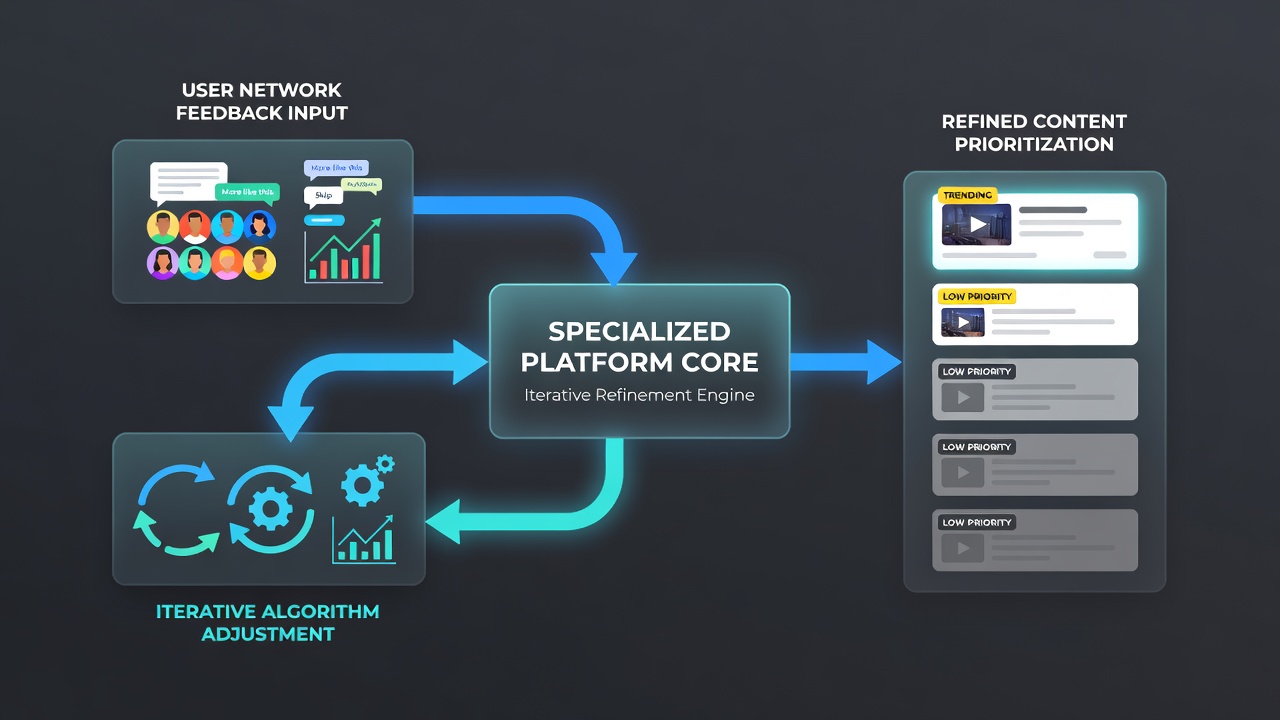
Adjustments often target specific dimensions like recency versus relevance or individual versus community signals, balancing competing objectives through weighted combinations updated after each round. When one cluster shows declining response to a content type, the model reduces its priority score for similar users in subsequent iterations, while boosting alternatives that demonstrate better retention. This localized tuning prevents uniform application across the entire platform and instead creates differentiated experiences shaped by distinct network characteristics.
Integration of External Data Sources
Beyond direct user actions, platforms incorporate supplementary inputs such as temporal trends or cross-platform references to enrich the feedback model. These additions undergo the same iterative validation, where their impact on engagement within user networks determines whether they receive increased influence in ranking calculations. Studies conducted across multiple regions reveal that platforms maintaining transparent documentation of these integrations achieve more consistent prioritization outcomes over successive update cycles.
Geographic and Sector Variations
Implementation details differ by region because regulatory frameworks shape data handling practices that affect feedback collection volume and frequency. Platforms operating under European Union guidelines process signals with additional constraints on retention periods, which in turn influences how many iterations can draw from historical network patterns. In contrast, systems in North American markets often retain longer histories, enabling deeper analysis of multi-month trends before model adjustments take effect. Figures released in September 2026 from various monitoring bodies indicated regional differences in average cycle times between updates, ranging from daily refreshes in high-velocity environments to weekly reviews in more regulated settings.
Performance Measurement Across Cycles
Platforms evaluate success through metrics that track changes in user retention, session length, and cross-network content propagation rather than isolated click rates. Analysts compare pre- and post-update distributions to quantify how effectively new prioritizations align with observed preferences in different user segments. One documented approach involves A/B testing across parallel network cohorts, where one group experiences updated rules while the other continues under previous settings, allowing direct measurement of incremental gains attributable to each iteration.
Evidence from industry analyses shows that repeated refinement cycles reduce mismatch between surfaced content and user expectations within connected groups, leading to tighter alignment over time. Platforms that log these alignment improvements publish aggregate statistics demonstrating steady gains in relevance scores derived from network feedback.
Conclusion
Specialized platforms achieve refined content prioritization through continuous loops that translate user network interactions into updated ranking parameters. The process relies on systematic collection, analysis, and application of engagement data across iterative cycles, with adjustments calibrated to observed outcomes in specific communities. Regulatory environments and measurement practices further shape how these refinements unfold, producing differentiated results across platforms and regions while maintaining focus on network-derived signals as the primary driver.